Trucks that drive usefully
By filling rotations better and avoiding unnecessary journeys, Nereva helps drive less for the same work. Fewer kilometres means directly less fuel.

Nereva tackles everyday waste: by synchronising flows, it helps construction and transport companies reduce their impact, and document it.
Drive less, document better
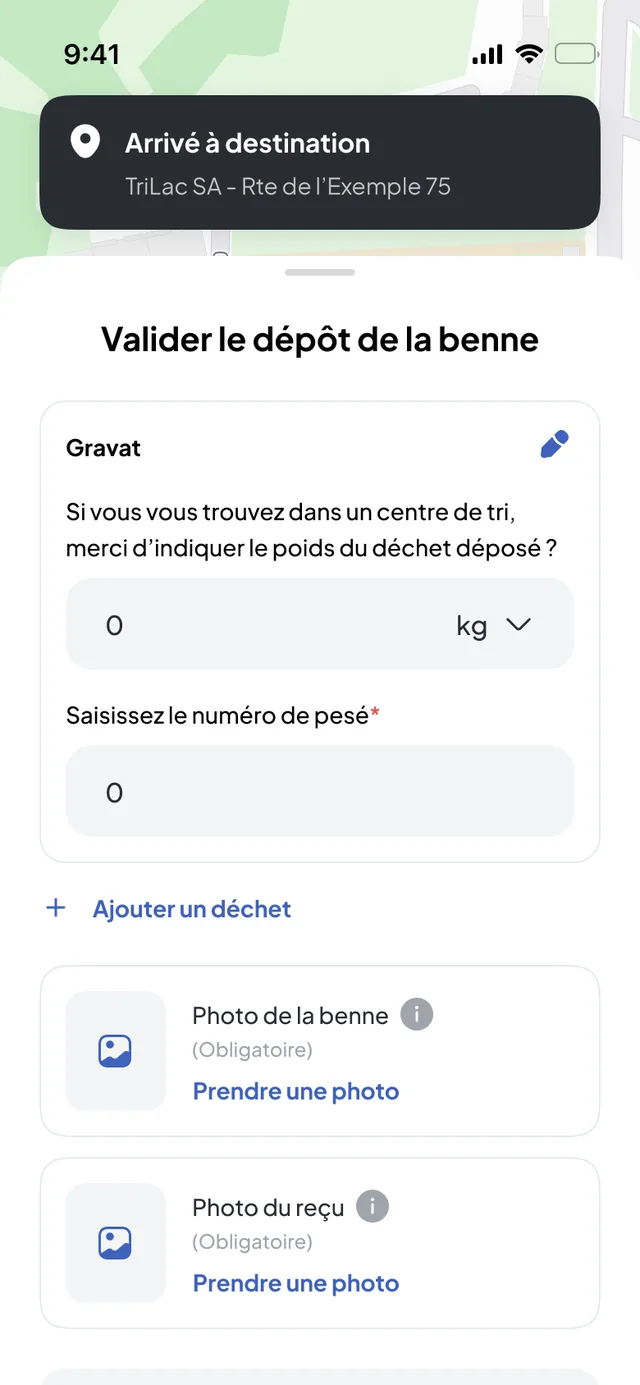
Better-filled rotations, fewer empty runs, less idling: sobriety comes from organisation, not slogans.
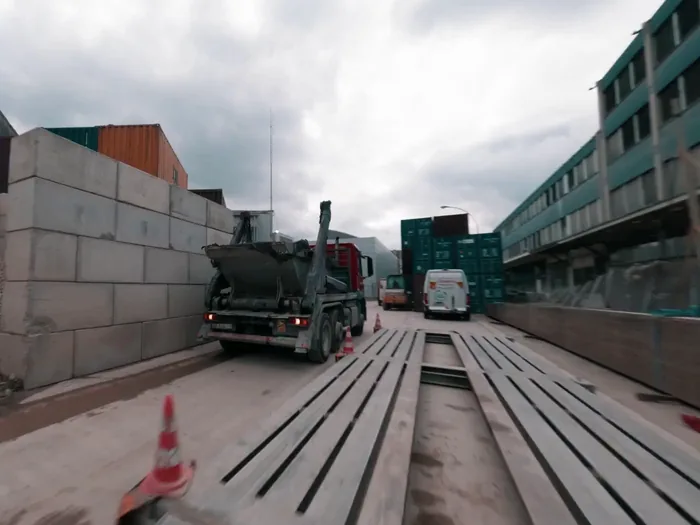
A truck driving empty, a skip leaving half full, one journey too many: each time, it is fuel burned for nothing. By synchronising flows, Nereva aims to reduce part of it, without speeches and without a quantified promise.
The problem. Principals, public procurement and regulations demand accounts on emissions and waste management, and this will only get stronger.
Since your flows are recorded in Nereva, you have the data in hand on the day you are asked for it.
Kilometres driven, rotations, waste flows: Nereva turns your activity into timestamped data from the field.
Activity data you can reuse in your own processes: an assessment carried out by you or by a third party, an answer to a call for tenders, reporting requested by a principal. The carbon footprint itself is prepared in those processes, from this data.
By filling rotations better and avoiding unnecessary journeys, Nereva helps drive less for the same work. Fewer kilometres means directly less fuel.
Better coordination reduces trucks waiting on site. Less time with the engine running, less unnecessary consumption.
Fairer assignment avoids extra round trips and half-empty runs. Fuel follows the same logic as margin.
Skips, materials, excavated material: every flow is traced, timestamped and documented. Enough to find, for each removal, what left, when and to where; the applicable traceability obligations depend on the context and the regulations concerned.
By knowing what leaves each site and where it goes, you have a factual basis for your sorting and removal choices. Recycling and recovery rates then fall within your own processes.
Photos, digital notes and history: you have the supporting documents for what was transported and dropped at the sorting centre, ready to present.
Today, a QSE manager has almost no visibility of trucks and skips: the information lives in calls, paper notes and people’s heads, and what enters and leaves the site largely goes under the radar. With Nereva, the recorded flows (skips, removals, materials, transports) become visible and traced, during the mission and in the history.
Quantities transported, type of flow, nature of materials, which skip with what inside, time of each operation, photo and digital note to back it up. No more “we don’t know what left or where”. Discrepancies are seen immediately, and each dispute can be checked against the records.
The driver no longer has to handle calls while driving. Arrivals and departures are announced and ordered: fewer crossings, less machine waiting, fewer improvised manoeuvres on site.
From collection to the outlet, every piece of waste is traced. Enough to find the history and the available supporting documents more easily for your own monitoring and your answers to principals, without reconstructing information after the fact. Your teams keep control of their regulatory obligations, waste register included, while Nereva centralises traceability and the available supporting documents.
A single lever, concrete and measurable: empty kilometres. Enter your figures, adjust the assumptions, look at the order of magnitude: the calculation applies to a transport company as to a construction company.
Whether you are a carrier or a construction company, think in terms of trucks running: your own fleet, or the trucks that deliver to and clear your sites. The values below are assumptions, adjust them to your reality; the result is not a Nereva measurement.
A loaded construction truck often uses 30 to 45 litres.
Journeys where the truck drives without a payload.
Conservative assumption: filling rotations better, removing unnecessary journeys.
Calculation: empty kilometres avoided, converted into litres then into CO₂ (around 2.64 kg of CO₂ per litre of diesel burned). Nereva promises no percentage: it gives you the means to reduce these kilometres and to measure it on your own data.
A percentage reduction in your emissions: it depends on your activity and is measured on your own figures, not on a promise.
The means to reduce real waste and measure your progress, from your own figures.
15-day free trial with 2 licences. No payment method required. Then a monthly subscription, with no fixed term.