Interested in working together?
Contact us →In this article
Why EVA exists
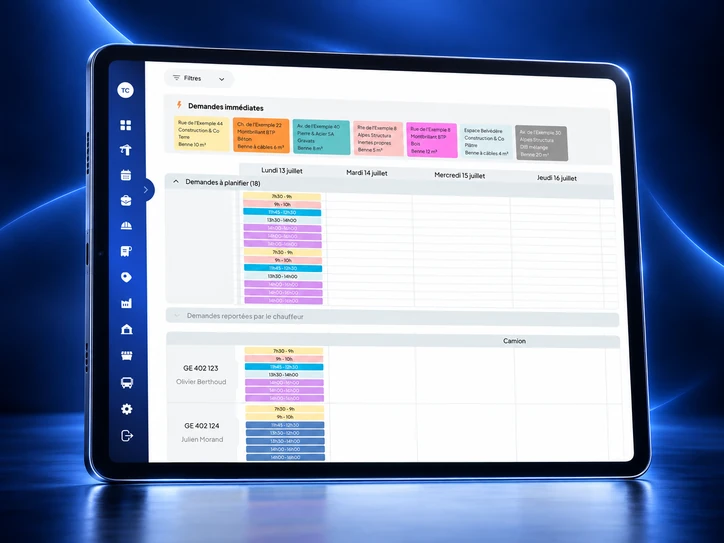
Tipper-truck logistics is one of the most changeable systems on a construction site. Every day, the right vehicles must be assigned to the right missions, rotations coordinated and contingencies absorbed: delays, cancellations, changes of priority, dependencies between missions. This organisation still relies largely on phone calls and manual adjustments.
The Nereva platform already records what happened: requests, planning, time-stamped steps, waiting times, cancellations, photos and delivery notes. This is the material EVA is meant to use, with no additional data entry.
Where EVA stands
Today, the platform collects operational data and the analytics make them readable: planning per truck and per driver, dashboard, statements, reports and history. This is the base EVA builds on.
Under development, under the name EVA: a planning proposal (order of missions, groupings, time slots, to be validated by the operator), the detection of the day’s tensions with adjustment proposals, and the recognition of waste on mission photos. Availability will be announced when the functions are ready.
As a vision: a broader anticipation of situations, with new variables, and explainable proposals, progressively integrated into the planning and the applications, never as an autopilot.
EVA proposes, your teams decide
The analytics and operational intelligence functions produce indications of an exclusively indicative nature. A proposal is validated, modified or ignored; nothing is triggered without a person. No decision producing legal or significant effects is taken automatically, and geolocation is never used to monitor, rank or sanction a driver.
Which data, under which conditions
Nereva’s AI and data policy separates two zones: an operational, pseudonymised zone reserved for the provision of the service, and an irreversibly anonymised and aggregated zone, the only one used for training. No training data is identifying; driver and vehicle identifiers are removed and journeys are aggregated. The customer’s data remains its property.
Trademark and patent applications
EVA is developed by Nereva, which owns its source code and intellectual property. Nereva protects its work through patent applications, filed in Switzerland and France on 26 November 2024 and internationally (PCT) on 26 November 2025, published in 2026 and currently under examination.
Following EVA
The status of each capability is published on the EVA and Forecasts and tensions pages; the filings are detailed on the Trademark & patent page. A capability changes status when it is actually delivered.
Keen to see Nereva on your own flows?
Try free for 15 days →